





Iran War Oil Shock Sends Energy Costs Spiraling Worldwide: How the Strait of Hormuz Crisis Became the Biggest Global Supply Chain Catastrophe of the 21st Century
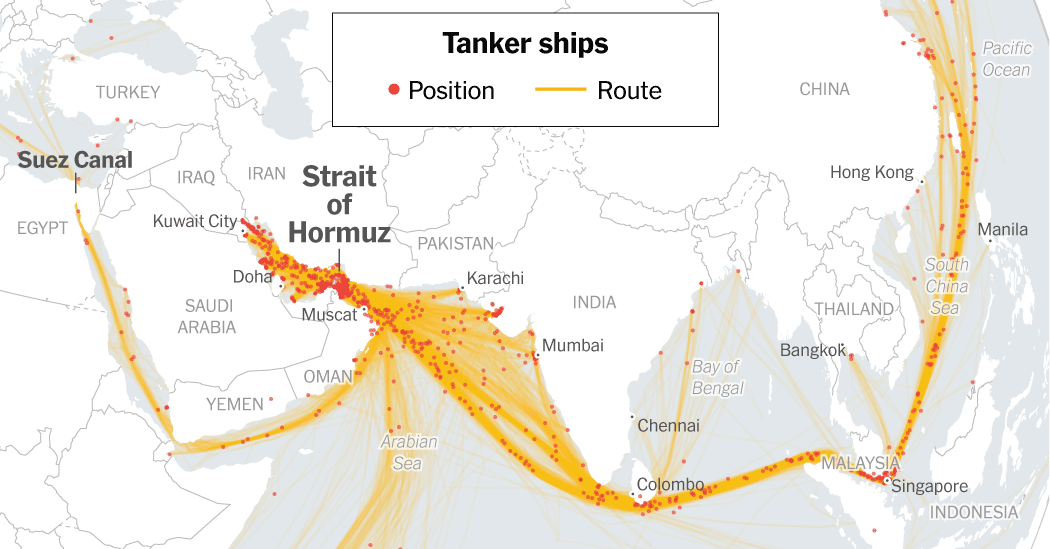
Three months after the United States and Israel launched military operations against Iran, the consequences of the resulting Strait of Hormuz closure have grown into what supply chain analysts and energy economists describe as the largest and most damaging energy supply disruption in the 21st century, exceeding in scope and severity every previous Middle East oil shock, including the 1973 Arab embargo.
The facts on the ground, as of today, June 1, 2026, tell a story of unprecedented industrial paralysis. Over 1,550 vessels remain stranded in waters adjacent to the Strait, with some 22,500 mariners unable to continue their voyages. The Iranian Revolutionary Guard continues to operate sea mines and conduct attacks on merchant shipping despite the fragile ceasefire framework. The US maintains a naval blockade of Iranian ports, creating what maritime law experts describe as a dual blockade situation with no clear legal precedent in modern international law.
Before February 28, 2026, the Strait of Hormuz handled approximately 20 percent of the world’s seaborne oil trade and 20 percent of global liquefied natural gas flows every single day. The world’s largest crude oil tankers transited the 34-kilometer-wide waterway routinely, carrying energy that powered homes, factories, and vehicles across Asia, Europe, and beyond. That normalcy ended in a matter of hours.
The price response was immediate and severe. Brent crude surged from pre-war levels to a peak of $144 per barrel in mid-April, generating the widest price range in the crude oil market’s modern history. The IEA’s May 2026 Oil Market Report confirms that North Sea Dated crude traded in an unparalleled range of nearly $50 per barrel in April alone. Markets today price Brent around $106 per barrel, with analysts at major financial institutions pricing in a meaningful probability of a new all-time crude oil high before September 30, 2026, if no diplomatic breakthrough materializes.
Global oil supply dropped by 12.8 million barrels per day cumulatively since February, with Gulf producers accounting for 14.4 million barrels per day in lost output below pre-war levels. The EIA projects global oil supply will average 3.9 million barrels per day lower for all of 2026 even under the optimistic assumption that flows through the Strait resume gradually from this month.
The industrial consequences extend through every supply chain connected to the global energy system. European airlines began raising ticket prices in March as jet fuel costs surged. Asian manufacturers reliant on Gulf petrochemical feedstocks scrambled for alternative inputs at premium prices. Heating oil futures reached their highest levels since 2022. The Philippines declared a national energy crisis on March 24, 2026. India, Japan, South Korea, and other oil-dependent Asian economies tapped strategic reserves while lobbying Washington for diplomatic progress.
The IEA coordinated emergency stock releases to push oil toward Asia and Oceania, but reserve releases function as time-buying measures, not structural solutions. The IEA itself acknowledges that if a deal allowing Strait traffic to gradually resume from the third quarter does not materialize, the demand and supply models for the year require fundamental revision toward even tighter conditions.
Shipping insurance premiums for Gulf transits reached levels that make voyages economically unviable even for tankers willing to risk the passage. The Lloyd’s of London market reports that Gulf war risk premiums consumed the annual profit of multiple shipping operators in a single month.
Read More: Global AI Industry Revolution: Colorado’s Historic AI Law Activates June 30 as US-EU Regulatory Race Accelerates and Tech Giants Face Billion-Dollar Compliance Costs
For the global economy, the Hormuz crisis compounds every other headwind of 2026, from US tariff uncertainty to emerging market debt stress to slowing Chinese growth. The IMF warns that persistent oil prices above $100 per barrel for the remainder of 2026 would reduce global growth by an additional 0.5 to 0.8 percentage points beyond current projections, potentially pushing several vulnerable economies into recession.
No diplomatic breakthrough appears imminent. Washington and Tehran conduct back-channel conversations, and international mediators from Oman and Qatar maintain communication lines. But the fundamental political and security demands of both sides remain far apart. The world’s energy system, and the global economy built upon it, waits.