




Global Economy Faces Stagflation Risk as Iran War Oil Shock Collides With Slowing Growth Across Major Economies
Published: May 6, 2026 | By USA News Reporters Economics Desk
Global economy is walking a tightrope between inflation and recession, and the rope is fraying. The oil shock triggered by the Iran war and the Strait of Hormuz closure has collided with an already decelerating world economy, creating conditions that economists describe as stagflationary, a toxic combination of rising prices and slowing growth that central banks are poorly equipped to fight. The IMF, major investment banks, and independent forecasters are all revising their global growth projections downward while simultaneously lifting their inflation outlooks, a combination that signals real pain ahead.
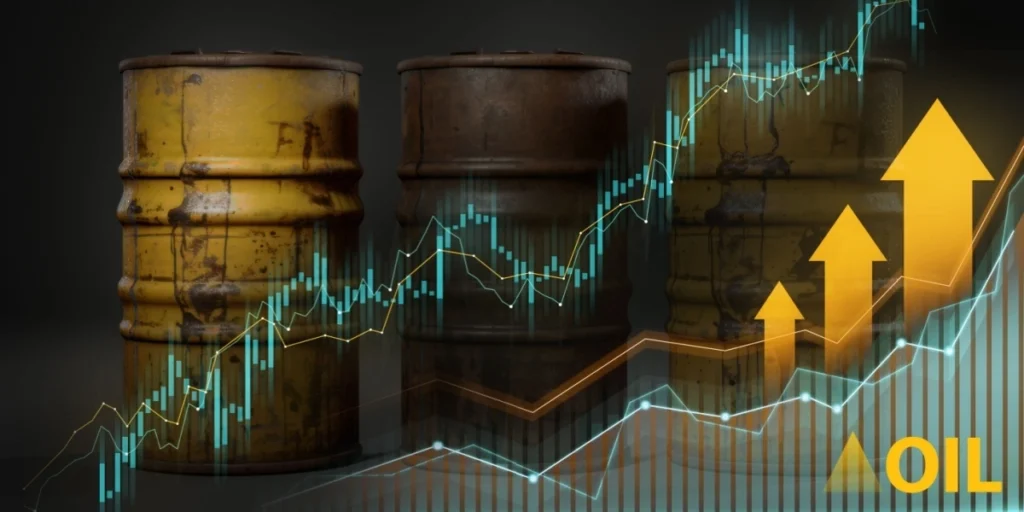
The immediate market signal came this week when Brent crude swung between $102 and $114 per barrel in a single session, responding to competing signals from the Iran-US ceasefire and renewed Iranian drone strikes on UAE energy infrastructure. Goldman Sachs analysts told clients that they expect $80 to $90 per barrel to represent the new floor for oil prices, regardless of whether the Hormuz situation improves, because the disruption has permanently repriced the geopolitical risk premium embedded in global energy markets.
The fertilizer dimension of the crisis is receiving less attention than it deserves. The Persian Gulf accounts for roughly 30 to 35% of global urea exports and 20 to 30% of ammonia exports. Both are critical inputs for crop production worldwide. With Hormuz disrupted, fertilizer shipments from Qatar, Saudi Arabia, and the UAE have slowed to a fraction of their normal volumes. Commodity analysts warn that food prices will begin rising sharply in the coming months as farmers in Asia, Africa, and Latin America face fertilizer shortages during the critical planting season. The food inflation wave is still building, and its full force has not yet reached global consumer prices.
Canada has already seen fuel prices rise approximately 30% since the war began. In the United States, jet fuel prices have nearly doubled, pushing airline operating costs to levels that will inevitably translate into higher ticket prices and reduced route frequency. Shipping companies including Maersk, the world’s largest container carrier, have imposed fuel surcharges that cascade through global supply chains, raising the cost of virtually every product that moves by sea. E-commerce giants and logistics companies have passed those surcharges directly to consumers.
Central banks face an impossible choice. The European Central Bank and the Bank of England had been contemplating further interest rate cuts after successfully bringing inflation down from its 2022 to 2023 peaks. Those plans are now on hold. Raising rates to fight external supply-driven inflation risks triggering the recession that slowing growth already threatens. Holding rates steady accepts higher inflation that may embed itself into wage and price-setting behavior. Neither option is good. Both carry serious consequences for employment, investment, and public debt sustainability.
The economies most at risk from stagflation are those with high energy import dependence, elevated existing debt levels, and limited central bank credibility. Pakistan, Sri Lanka, Bangladesh, and several sub-Saharan African nations fit that profile precisely. Pakistan in particular, still recovering from its 2022 debt crisis and flood-related damage, faces a cruel double pressure of rising import costs and a current account already under stress. Bangladesh’s garment export industry, a major driver of the national economy, faces higher input costs and potential demand softness in Western markets simultaneously.
Read More: Trump Says Ceasefire Should Be Cancelled If Hamas Doesn’t Release Hostages by Saturday
Commodity exporters are the mirror image of this pain. Brazil, whose Petrobras is expanding production, and Venezuela, whose government is collecting oil revenues at dramatically higher prices, are seeing fiscal windfalls from the same crisis that is devastating importers. Russia, despite Western sanctions, benefits from elevated global oil prices that increase the value of its exports to non-sanctioning customers. The economic war embedded in the energy crisis produces winners and losers in ways that don’t neatly align with geopolitical allegiances.
The path out of the stagflationary trap runs through the Strait of Hormuz. Every week of continued closure adds to the pressure. Pakistan’s mediation efforts between the US and Iran are the most active diplomatic track currently in play, and Iranian Foreign Minister Araghchi has signaled that talks are ‘making progress.’ But progress in Iranian diplomatic language has historically been a very elastic concept. Markets are not pricing in quick resolution, and for households and businesses around the world paying the cost of this geopolitical standoff through their energy bills, food costs, and shipping surcharges, the wait for resolution feels increasingly urgent.