





Stagflation Warning Flashes Red: How the Iran War Oil Shock, Trump Tariffs, and Mass Deportations Are Combining to Create the Perfect Economic Storm for American Workers in 2026
Sunday, May 10, 2026 | By USA News Reporters Economics Desk
Three forces are converging on the American economy simultaneously, and none of them are moving in a direction that benefits ordinary workers. The Iran war has pushed oil and energy prices to levels not seen since the global financial crisis era. Trump’s tariff regime, now under serious legal challenge but still in operational effect, is raising the cost of imported goods across every major consumer category. And the administration’s mass deportation program is removing workers from industries including agriculture, construction, food processing, and hospitality that depend on immigrant labor to function. The result is an economy that is simultaneously experiencing inflationary pressure from supply-side costs and contractionary pressure from reduced labor and trade activity.
Stagflation, the combination of stagnant growth and persistent inflation, is the word that economists most dread and most carefully avoid using prematurely. But the conditions that produce it are visibly assembling. The IMF cut its global growth forecast for 2026 to 3.1 percent in its April World Economic Outlook, with the explicit warning that the Iran war energy shock makes the downside scenario, 2.5 percent growth and 5.4 percent inflation, entirely plausible. For the United States specifically, the combination of tariff-driven goods price inflation, energy cost pass-through, and the labor market disruption from deportations creates a stagflationary cocktail that the Federal Reserve’s policy toolkit is poorly designed to address.
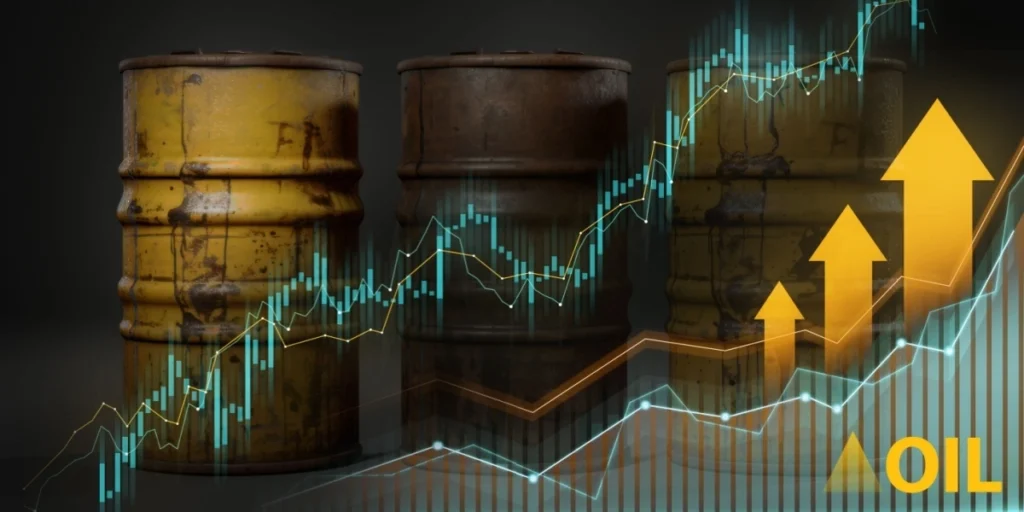
Energy costs are the most immediate transmission mechanism from the Hormuz crisis to the American consumer. Gasoline prices at the pump reflect crude oil at $101 to $108 per barrel. Diesel, which powers the trucks that move virtually all goods through the US supply chain, has risen sharply and is passing through to transport and logistics costs. Airlines are managing fuel bills that have transformed profitability calculations. Utilities that operate oil-fired and natural gas generation are seeing input cost increases that will eventually reach electricity bills. The energy price shock is diffuse, pervasive, and takes months to fully propagate through an economy the size of America’s.
The tariff regime’s impact on goods prices is equally pervasive but operates through different channels. Importers who cannot absorb tariff costs raise their prices to retailers, who raise their prices to consumers. The Tax Foundation estimates the tariff program cost the average American household $1,500 in 2026. Low-income households, who spend proportionally more of their budgets on goods and less on services, bear a larger share of this burden relative to their income. The goods that have risen most in price include electronics, clothing, appliances, and auto parts, exactly the categories where middle and working-class Americans spend significant shares of their budgets.
The deportation program’s economic impact is beginning to show in sector-specific labor market data. Agricultural employers in California, Florida, Texas, and Georgia report labor shortages that are leaving crops unharvested. The construction industry, which has an estimated 1.5 million undocumented workers among its workforce, is reporting project delays and cost overruns linked to labor unavailability. Food processing plants have seen production disruptions as workforces have shrunk. Hotel and restaurant operators in tourist destinations report staffing gaps that are reducing service capacity and revenue.
The Federal Reserve faces an impossible tradeoff. Raising interest rates to combat inflation would deepen the economic slowdown and increase unemployment. Cutting rates to support growth would risk further inflation acceleration. Fed Chair Jerome Powell has carefully maintained the message that the central bank will ‘remain data-dependent,’ but the data itself is sending conflicting signals. Inflation above target argues for tightening. Slowing growth argues for easing. The energy shock is a supply-side inflation driver that monetary policy cannot cure, only slow, while the demand-weakening effects of tariffs and deportations argue against tightening further.
Consumer sentiment indicators have deteriorated meaningfully since the start of 2026. Surveys show that Americans are more pessimistic about the economic outlook than at any point since the post-COVID inflation peak. Concerns about job security, rising prices, and the costs of the Middle East war are consistently cited. Small business confidence has also fallen, with owners citing tariff cost uncertainty and difficulty finding workers as their top operational challenges.
Read More: Donald Trump Moves to Revoke Joe Biden’s Security Clearance and Announces Sanctions on International Criminal Court
The housing market adds another layer of complexity. Mortgage rates remain elevated relative to the pre-2022 era. Construction costs have risen due to tariffs on imported building materials and labor shortages in the construction workforce. Housing affordability is at its lowest point in decades in most major metropolitan areas. The housing shortage that drove price increases during the post-COVID recovery has not been resolved, and the combination of high rates and high prices is freezing many potential buyers out of homeownership entirely.
Against this backdrop, the question American policymakers face is whether the three simultaneous pressures on the economy, the energy shock, the tariff regime, and the labor force reduction, represent a temporary disruption that the economy will work through, or the early stages of a structural economic adjustment that will require years to fully absorb. The answer depends heavily on outcomes that Washington does not fully control: whether diplomacy ends the Iran war, whether courts ultimately constrain the tariff regime, and whether the enforcement pace on immigration modulates as the political costs become clearer. None of those outcomes are certain, and the uncertainty itself carries an economic cost that does not appear in any single data series but is felt in every business decision deferred and every investment withheld.