




SpaceX IPO Set for June 12 as Investors Seek Exits and Elon Musk Faces Biggest Financial Moment of His Career
NEW YORK / CAPE CANAVERAL | June 3, 2026 | Usanewsreporters.com Breaking News
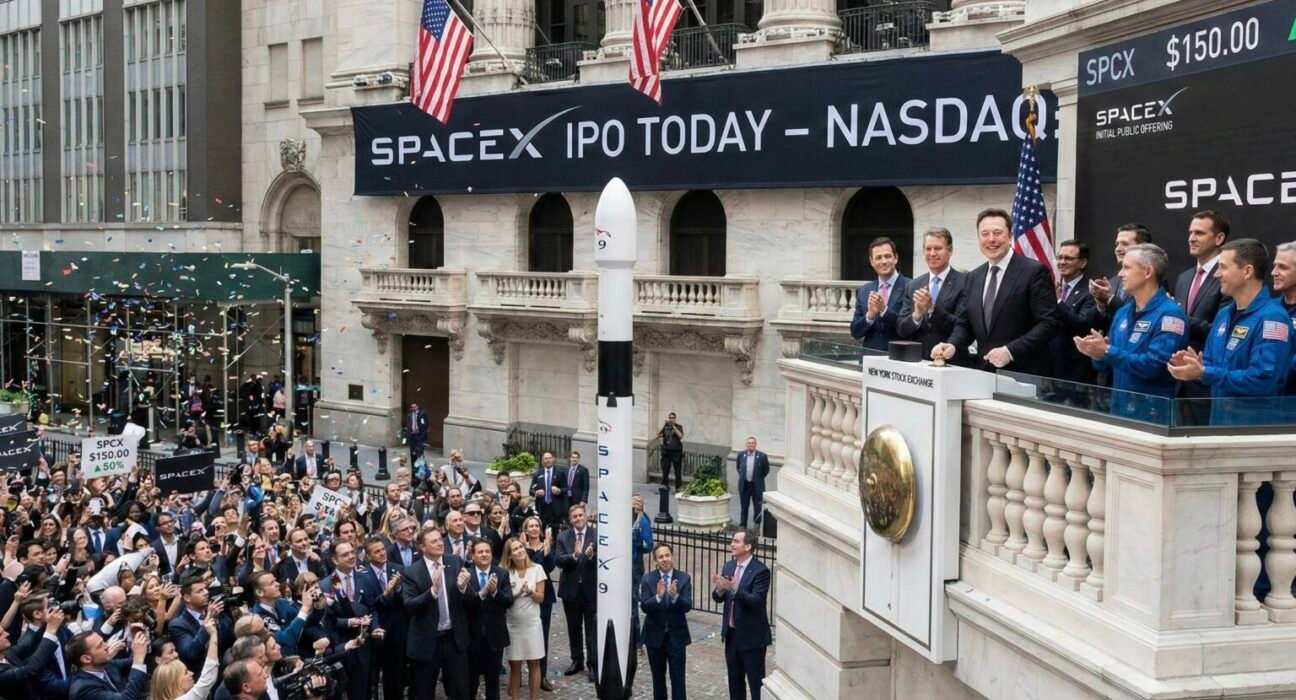
The most anticipated initial public offering in the history of the American space industry is now nine days away, and it is already generating the kind of friction, excitement, and controversy that only an Elon Musk enterprise can produce at scale. SpaceX is scheduled to list on the Nasdaq under the ticker SPCX on June 12, 2026, in what analysts expect to rank among the largest tech IPOs in history. But even before the first trade executes, the offering has exposed serious fault lines between retail investors, institutional players, and the proxy fund structures that gave earlier investors exposure to the private company.
Investors who purchased stakes in SpaceX through proxy investment vehicles, funds specifically designed to provide retail access to the private company before its listing, are now seeking exits as the IPO date approaches. According to reports surfacing this week, many of these investors are trapped. Liquidity constraints built into the proxy fund structures prevent them from selling until SpaceX shares actually begin trading on Nasdaq, by which point post-listing volatility could erase anticipated gains. The situation highlights the risks embedded in the booming market for pre-IPO retail investing.
The valuation question remains the central debate in financial circles. SpaceX’s business combines a dominant commercial launch operation through its Falcon 9 and Falcon Heavy rockets, a rapidly expanding Starlink satellite internet service that has become a critical communications infrastructure for everything from rural broadband to Ukrainian battlefield coordination, and the Starship program, the most powerful rocket ever built, which aims to carry humans to Mars. Valuing those three businesses within a single corporate entity requires assumptions about technology, market timing, and regulatory approval that analysts find genuinely difficult to model.
At the same time, Anthropic, the artificial intelligence safety company founded by former OpenAI researchers, made headlines this week by confidentially filing its own IPO paperwork with the Securities and Exchange Commission. The Anthropic filing adds another dimension to the technology sector’s mid-2026 public market moment, with two of Silicon Valley’s most closely watched private companies preparing to transition to public ownership within the same calendar quarter. Market observers note that investor appetite for AI and deep-tech names remains strong, though interest rates and macro uncertainty could affect pricing.
Musk himself is a source of both commercial advantage and reputational risk for the SpaceX offering. His political alignment with the Trump administration has generated both government contract opportunities and significant public controversy. SpaceX holds major launch contracts with NASA and the Department of Defense. The company’s role in providing Starlink connectivity to U.S. military operations globally makes it, in practical terms, already deeply embedded in American national security infrastructure. That relationship with government creates revenue certainty that typical commercial enterprises lack.
The Starlink network deserves particular investor attention. The service now operates across more than 100 countries, with millions of active subscribers ranging from individual households in rural Africa and South America to maritime shipping companies, airlines, and government agencies. Revenue per subscriber, churn rates, and the cost of manufacturing and launching replacement satellites are the key variables investors are studying. Analysts at several investment banks have projected that Starlink alone could justify a valuation that makes the overall SpaceX listing competitive with the largest S&P 500 technology companies.
Starship remains the wild card. The vehicle completed a successful full-stack flight test earlier this year, demonstrating the ability to launch, separate stages, and achieve controlled descent of both the booster and the spacecraft. Full reusability, the goal that Musk has described as essential to making humanity multi-planetary, remains a work in progress. If Starship achieves routine reusability within two to three years, it would reduce launch costs so dramatically that it could restructure the entire global launch industry. If development takes longer or encounters setbacks, the financial impact on SpaceX could be material.
International competition adds another variable. China’s national space program is accelerating rapidly, with its own heavy-lift rocket program progressing and its ambitions for lunar and Mars missions growing more explicit each year. The European Space Agency’s Ariane 6 launcher has struggled with reliability. India’s ISRO is positioning itself as a lower-cost launch alternative for commercial payloads. Musk has always argued that SpaceX’s cost structure, driven by reusability and vertical integration, gives it a structural competitive advantage that rivals cannot easily replicate.
Read More: Indirect Implications of Trump’s ICC Move ‘Can Be Very Serious’: Legal Expert
For ordinary investors watching from the sidelines, the SpaceX IPO represents a rare opportunity to invest in a company that has already demonstrated the ability to achieve what governments once considered impossible. It also represents significant financial risk. IPOs of this scale in sectors this technically complex often trade with extreme volatility in the first months after listing. The gap between a compelling narrative and a reliably profitable business requires scrutiny that the excitement of launch day sometimes makes difficult.
Whatever happens on June 12, the SpaceX IPO will mark a defining moment for private space commercialization, for the technology IPO market in 2026, and for the broader question of how American capitalism engages with the ambition to extend human civilization beyond Earth. The nine days between now and that listing feel, for many in the investment community, simultaneously very short and very long.