



China Plays to Trump’s Soft Spot for Offering Investments in the U.S.
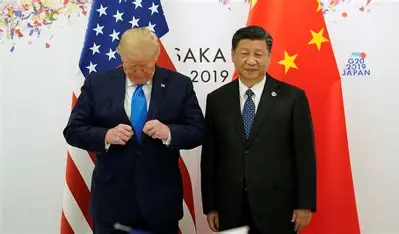
Washington, D.C. — In a carefully orchestrated move that has set off a wave of speculation across Washington and global financial circles, Chinese business delegations are reportedly preparing a series of major investment proposals aimed squarely at the U.S. economy. The strategy, sources say, is part of Beijing’s broader effort to align with former President Donald Trump’s pro-jobs and pro-investment agenda, as the former president inches closer to a possible return to the White House.
According to multiple diplomatic and trade insiders, Chinese state-backed companies and senior government officials have quietly been reaching out to U.S. business intermediaries and influential figures within Trump’s orbit. These behind-the-scenes discussions reportedly center on potential commitments to build advanced manufacturing hubs across the Midwest, expand the rare-earth mineral supply chain, and invest heavily in clean energy and infrastructure projects. The proposals,still in the exploratory phase, appear designed to tap directly into Trump’s long-standing focus on job creation and economic revitalization in America’s heartland.
Economic observers and policy analysts suggest that Beijing’s latest charm offensive is no accident. “Chinese strategists understand Trump’s economic instincts better than most,” explained Dr. Melissa Hargrove, a senior fellow at the Brookings Institution. “They know that Trump’s political brand was built on jobs, industry, and visible economic wins. If China can offer investment that brings factories and paychecks to swing states, they may be able to reopen dialogue that has been frozen since the trade war.”
Indeed, the proposed investments could include new plants for electric vehicle components, battery storage systems, and green manufacturing technology, industries that Trump has recently emphasized in his campaign rhetoric as essential to American competitiveness. For Beijing, such projects also present a strategic opportunity to soften Trump’s well-documented skepticism toward Chinese trade practices and tariffs.
The timing of China’s outreach is telling. U.S.-China relations remain at one of their lowest points in decades, marked by disputes over technology exports, Taiwan’s security, and accusations of intellectual property theft. However, diplomatic insiders describe a “quiet backchannel effort” between both sides to explore areas of potential cooperation that could deliver tangible benefits without triggering political uproar. These areas reportedly include clean energy collaboration, rare-earth mineral production, and joint ventures in manufacturing technology, sectors critical to both countries’ economic futures.
Yet not everyone in Washington is optimistic. Critics warn that Chinese capital could come with hidden geopolitical strings attached. Senator Tom Cotton (R-Ark.), a leading voice on national security issues, cautioned that “China doesn’t invest for charity, they invest for control. Every deal must be viewed through the lens of strategic influence.” His comments reflect growing bipartisan anxiety over Beijing’s economic footprint in critical industries such as semiconductors, data infrastructure, and renewable energy supply chains.
Despite the skepticism, sources close to Trump’s campaign say the former president is “open to serious offers that bring jobs back to American soil.” One senior aide, speaking to Innovation Times on condition of anonymity, said Trump’s approach would be pragmatic but cautious. “He’s not against doing business with China,” the aide said. “But any agreement would have to be fair, transparent, and deliver concrete benefits for U.S. workers.”
The Chinese Embassy in Washington has not denied the reports but issued a measured statement emphasizing Beijing’s commitment to “mutually beneficial cooperation between China and the United States based on equality and respect.” The embassy added that “investment in U.S. industries has historically strengthened ties and created opportunities for both peoples.”
Analysts view this messaging as part of a broader pattern in China’s foreign economic strategy. In recent years, Beijing has deployed similar outreach efforts in Latin America, Africa, and Southeast Asia, investing in local industries that generate employment while enhancing China’s diplomatic influence. According to Harold Lin, a Hong Kong–based international trade consultant, “Trump’s America First policy doesn’t necessarily exclude foreign investment. If China can frame their proposals as wins for the American worker, Trump may see it as a deal worth making.”
Still, domestic political realities could complicate any such rapprochement. Lawmakers across party lines have grown increasingly wary of Chinese investment in critical infrastructure. The Committee on Foreign Investment in the United States (CFIUS), which reviews deals for national security risks, has tightened its scrutiny of Chinese-linked acquisitions, particularly those involving advanced technologies, data networks, or energy grids.
Adding to the complexity, Trump’s campaign is reportedly crafting an economic blueprint focused on reviving U.S. manufacturing, rebuilding steel and energy sectors, and bolstering domestic production through tax incentives and deregulation. Beijing’s investment promises could dovetail neatly with that agenda, potentially offering Trump an opportunity to deliver quick economic wins in states like Michigan, Pennsylvania, and Ohio, which were pivotal in his 2016 victory.
Behind the scenes, diplomatic sources confirm that multiple Chinese trade delegations have already held discreet meetings with American industry groups and state-level economic development boards over the past two months. While these talks remain exploratory, they suggest a growing recognition in Beijing that engaging Trump early could pay dividends if he returns to power. “China’s leadership is pragmatic,” said Laura Chen, an analyst at the Center for Strategic and International Studies. “They understand that Trump is transactional, if you can present him a deal that creates jobs and headlines, he’s willing to talk. But they also know the U.S. political climate is far more hawkish now than it was in 2017.”
For now, Trump has not commented publicly on Beijing’s overtures. However, his recent remarks hint at a more nuanced tone toward global trade partners. Speaking at a rally last week, Trump declared, “America will work with anyone who respects our strength, invests in our people, and plays fair.” Analysts interpret that as a subtle invitation for potential foreign investors, including China, to demonstrate their value in terms of jobs and economic growth rather than politics or ideology.
Whether this delicate dance between Washington and Beijing yields results remains uncertain. Both countries enter the 2024–2025 political season burdened with deep mistrust and competing domestic pressures. Yet even the perception of renewed economic dialogue could serve strategic interests on both sides: Beijing can portray itself as forward-looking and pragmatic, while Trump can showcase his dealmaking prowess and focus on American workers.
As Dr. Hargrove noted, “China doesn’t need Trump to sign anything right now. They just need to plant the idea that partnership is possible, that there’s a path forward built on commerce rather than confrontation.”
Ultimately, China’s offer of investment is more than a financial overture, it’s a diplomatic maneuver aimed at reshaping the narrative of U.S., China relations. By appealing to Trump’s instincts as a dealmaker, Beijing is betting that the next chapter between the two global powers might be written not in tariffs or sanctions, but in the factories, job sites, and industrial heartlands of America.