





Trump’s $170 Billion Immigration Enforcement Surge Triggers Legal Battles, Labor Shortages, and Political Firestorm Across America
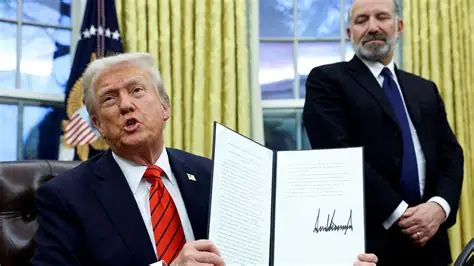
Trump’s is experiencing the most aggressive immigration enforcement campaign in its history, driven by $170 billion in additional funding allocated to ICE and US Border Patrol through September 2029, and the political, economic, and legal consequences are now cascading through American society at a speed that institutions are struggling to absorb. The Trump administration has removed or prompted the departure of more than 2.5 million people since January 2025, producing negative net migration for the first time in at least half a century — a statistic the White House promotes as a triumph while economists, judges, and employers describe consequences that are only beginning to be fully understood.
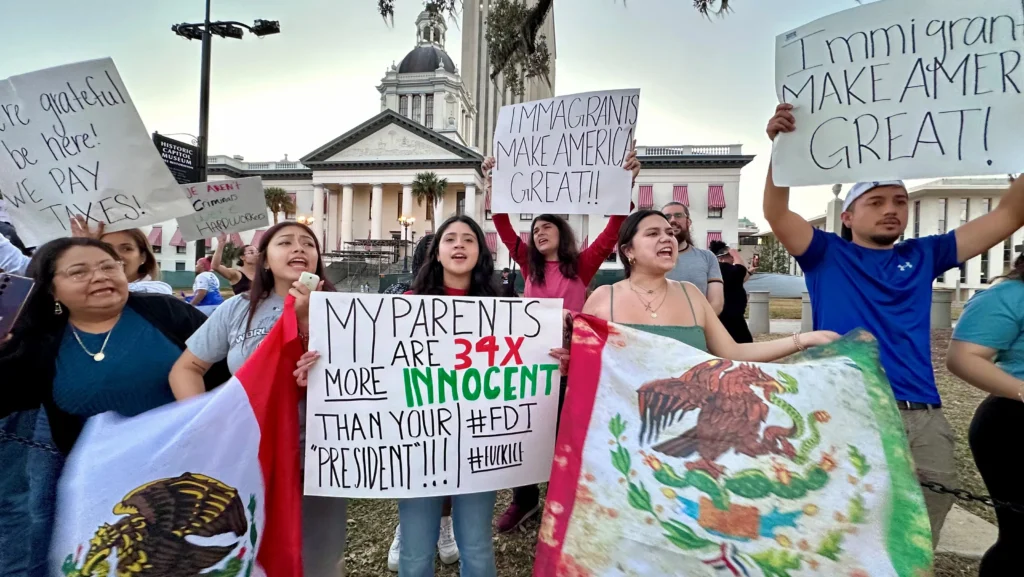
The enforcement apparatus has expanded far beyond the southern border. Federal agents have conducted sweeps in immigrant neighborhoods across major American cities, producing confrontations with residents, local officials, and in some cases, legal challenges. The administration has deployed masked agents using tear gas in residential areas, drawn significant condemnation from civil liberties organizations, and generated videos that have circulated globally. Border Patrol Chief Michael Banks, who oversaw the mass deportation campaign since its beginning, resigned abruptly this month without explanation from the administration, prompting speculation about internal disputes over methods or strategy.
Legal challenges are multiplying at every level of the federal court system. A federal court ordered the Trump administration to return a Colombian woman deported to the Democratic Republic of Congo, a country she had no connection to, after finding the deportation violated basic legal standards. The Board of Immigration Appeals ruled this month in Matter of Santiago-Santiago that DACA status alone is not sufficient to terminate removal proceedings, a ruling that puts hundreds of thousands of DACA recipients — young people brought to the US as children — in renewed legal jeopardy. A separate federal lawsuit challenges the administration’s visa policy targeting researchers and journalists the State Department accuses of complicity in censorship.
The Supreme Court is weighing multiple immigration cases with generational implications. Pending rulings could determine whether hundreds of thousands of people will lose deportation protections that currently allow them to live and work legally in the United States. The court is also considering whether children born in the US to undocumented parents will continue to receive birthright citizenship — a constitutional question that has not been seriously litigated in a century. If the court narrows or eliminates birthright citizenship, it would represent one of the most consequential immigration rulings in American history.
The labor market effects are becoming measurable and alarming to employers across multiple industries. Agricultural operations in California, Florida, and Texas, which have relied on immigrant labor for generations, are reporting worker shortages that are threatening crop harvests. The American Farm Bureau has warned that produce prices will rise sharply this summer if labor shortages continue, adding to food inflation that is already politically sensitive. Construction companies in high-growth Sun Belt cities report that immigration enforcement has cut their available workforce by 20 to 40 percent in some local markets, slowing housing development at a time when the country faces an acute housing shortage.
The State Department has begun reviewing more than 50 Mexican consulates operating inside the United States, a process that could lead to closures or service reductions affecting millions of Mexican nationals who use consular services for identification, legal assistance, and business matters. The administration has not announced specific outcomes from that review, leaving consular users in uncertainty. Separately, the administration reportedly lifted an immigration processing hold for foreign physicians — a signal that economic pragmatism is beginning to create exceptions in the enforcement posture where specific worker shortages become acute enough to demand action.
Read More: Federal Reserve Gets New Leader as Senate Confirms Kevin Warsh Amid Economic Uncertainty and Energy Price Shock
Immigration judges issued more than 80,000 voluntary departure orders between January 2025 and March 2026. Advocacy organizations warn that the orders reflect not voluntary choice but coercion — the product of detention conditions, limited access to legal counsel, and court processes designed to move cases to conclusion faster than immigrants can effectively defend themselves.
The political calculation animating the enforcement surge is straightforward: the Trump administration believes maximum immigration enforcement is a winning electoral posture heading into the 2026 midterms. Polling data shows mixed public opinion, with strong majorities supporting enforcement against violent criminals and illegal border crossers, but significant opposition to tactics that affect legal immigrants, DACA recipients, and long-established community members. Democrats are betting that the human cost of the crackdown will generate sufficient political backlash to flip House and Senate seats. Republicans are betting it will not.