






China’s Shenzhou 23 Mission Targets Year-Long Space Record as Beijing’s 2030 Moon Race with NASA Enters Its Most Critical Phase
Usanewsreporters.com | Breaking News | May 26, 2026 | Space | China | Science | Technology
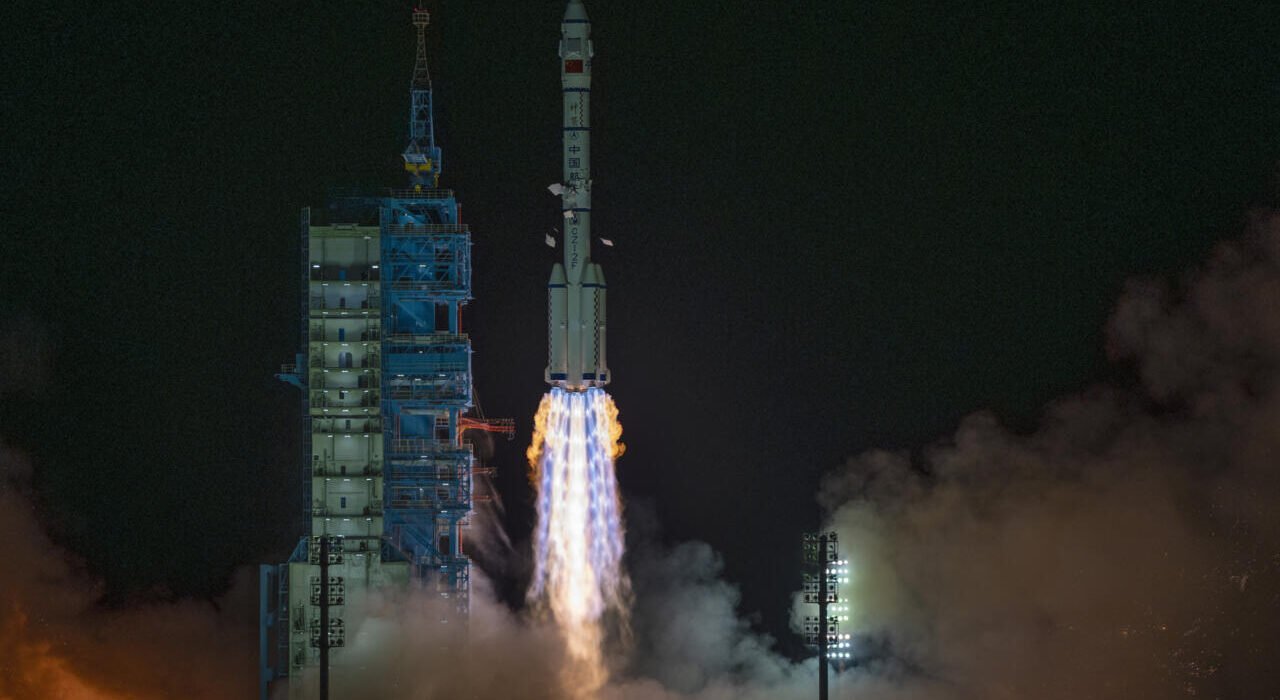
China’s demonstrated the full momentum of its space ambitions this weekend with the successful launch of the Shenzhou 23 spacecraft from the Jiuquan Satellite Launch Center in northwestern China on Sunday, May 24, 2026. The mission, carrying three astronauts to the Tiangong space station, includes one crew member designated for a yearlong stay in orbit, a duration that would set a new record for Chinese space endurance and deliver scientific data critical to China’s goal of landing astronauts on the Moon by 2030.
Commander Zhu Yangzhu leads the three-person crew, which also includes Zhang Zhiyuan and Lai Ka-ying, identified by Chinese authorities as Li Jiaying in Mandarin. Lai’s selection carries historic significance beyond her role on the mission. Born and raised in Hong Kong, holding a doctoral degree in computer forensics from a Hong Kong institution, she becomes the first astronaut from the city to fly on a space mission. Her inclusion is a deliberate signal that China’s most prestigious national program embraces Hong Kong talent as integral to Beijing’s national achievements.
The one-year in-orbit experiment represents a significant escalation of China’s long-duration spaceflight program. The Shenzhou 21 crew, currently aboard Tiangong awaiting rotation, has already spent more than 200 days in orbit, setting the previous record for a Chinese crew. The incoming Shenzhou 23 astronaut who will remain for a year will push well beyond that mark, spending a continuous period in space that few humans from any nation have achieved. China’s Manned Space Agency spokesperson Zhang Jingbo emphasized that a one-year mission is not simply doubling two six-month tours. It creates qualitatively different challenges for the human body, the astronaut’s psychology, the life support systems, and the medical monitoring protocols.
Expert Bian Qiang from the Astronaut Center of China described the yearlong mission as an effort to explore the limits of human adaptability in long-duration spaceflight environments. The data this mission generates will feed directly into the mission planning and risk management calculations for China’s proposed crewed lunar landing, which must involve a significantly longer and more demanding journey than any current low-Earth orbit mission. The Moon is 384,000 kilometers away. Managing human health, performance, and survival for the transit, surface operations, and return journey requires a scientific foundation that current data sets cannot fully provide.
The Shenzhou 23 crew will execute more than 100 science and application projects spanning space life science, materials science, microgravity fluid physics, aerospace medicine, and advanced space technologies. The breadth of this research agenda reflects China’s position as a genuine scientific power in space, no longer catching up with earlier programs but actively advancing the international frontier of space-based research. Some of these projects will have commercial applications on Earth, others will inform the design of future spacecraft and habitats, and others will expand fundamental scientific knowledge about physics and biology in the space environment.
The geopolitical context of this launch matters as much as the technical achievements. NASA’s Artemis program is targeting 2028 for a crewed lunar landing, and the U.S. space agency has made the Moon’s south pole, with its water ice deposits, the primary destination. China is targeting the same region for its 2030 crewed mission, creating a literal race between two superpowers for humanity’s first permanent foothold on another world. The nation that establishes the first sustainable lunar presence will gain scientific, commercial, and strategic advantages that could define the space age for decades.
China’s space program has demonstrated remarkable resilience in the face of setbacks. Last year, an emergency mission in the Shenzhou program returned astronauts who had been temporarily stranded on Tiangong after a damaged spacecraft left them without a guaranteed return vehicle. The program launched a backup mission quickly, executed the rescue, and continued normal operations without significant delay. That kind of operational reliability is the mark of a mature and well-resourced space program, not a developing one.
The United States and China are not just competing in space. They are competing for the partnerships and allegiances of other spacefaring nations and space agencies. The European Space Agency, Japan’s JAXA, Canada, and other partners have committed to Artemis through international agreements that establish the Artemis Accords as the governance framework for lunar activities. China has its own partnership framework with Russia and a growing number of other nations. The governance architecture of the Moon, like the governance architecture of AI and trade, is being shaped right now by decisions that will have consequences extending far beyond the immediate horizon.
Read More: Iran Peace Talks Approach Make-or-Break Moment as Trump Holds Military Strikes and Gulf States Push Unprecedented 14-Point Nuclear Framework
Sunday’s launch also demonstrates the maturity of China’s industrial space ecosystem. The Long March 2F rocket that carried Shenzhou 23 is a proven workhorse with a strong reliability record. The spacecraft itself was delivered to the launch center two months ahead of its original schedule. A backup spacecraft, Shenzhou 24, is also ready for a launch-on-need scenario. The ability to maintain this operational tempo reflects sustained, long-term investment in space technology, manufacturing, and human capital that the Chinese state has prioritized consistently.
The year that lies ahead for the Shenzhou 23 crew, orbiting 400 kilometers above the Earth for twelve months while conducting science, maintaining the station, and demonstrating the endurance that lunar missions will require, will be one of the most watched periods in the history of human spaceflight. When they return to Inner Mongolia at the end of their mission, their data and their experience will move China measurably closer to the Moon. The race is not over, but it is intensifying, and Sunday’s launch confirmed that China is running it at full speed.